Rebecca Wilks

Rebecca Wilks; Photographer, Teacher, Yarnellian, Do-Gooder

Friday, April 3, 2015

Camper Addiction


The plan was to meet some photo friends for a new adventure near Winslow AZ (that’s the ‘Standing on the Corner’ place) on Monday.  I was having some serious camper withdrawal, so I decided to camp up there Sunday and Monday night.
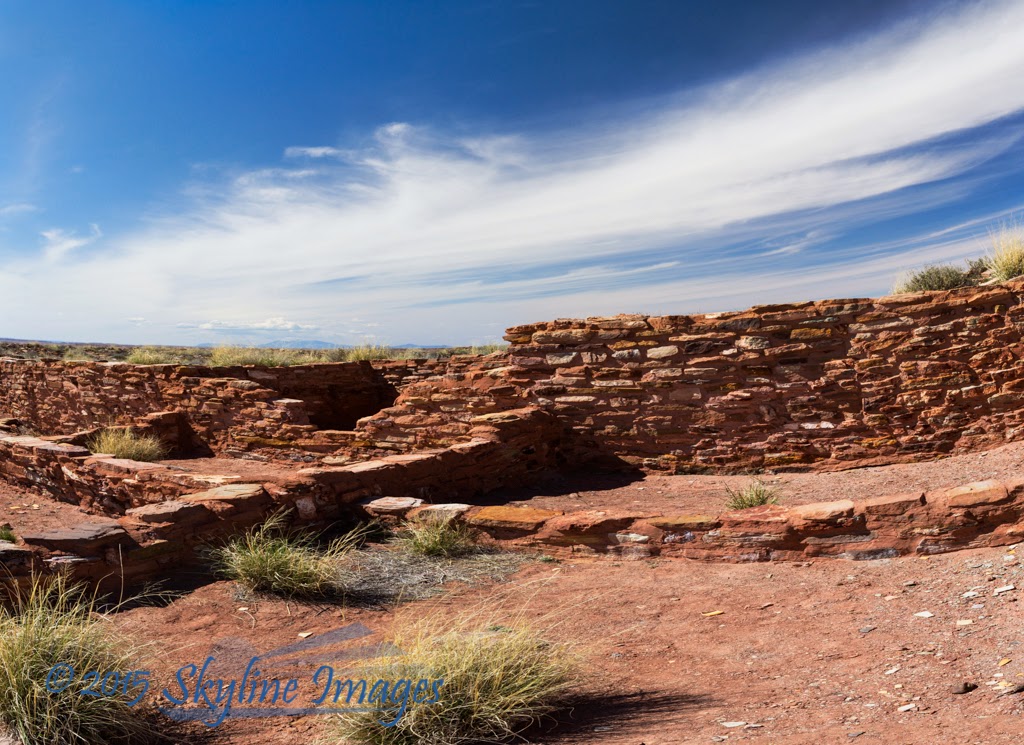
Homolovi II Ruins
The first stop was Homolovi State Park, created in 1993 to protect some ancient Pueblo Indian sites.  Apparently people were digging into the ruins with a backhoe.  The largest pueblo contains 1200 rooms, though only a few have been excavated enough to appreciate.  I sat on the hill imagining life there 1000 years ago, above the Little Colorado River.  It’s a nice neighborhood.

That being said, the park is not so photographer-friendly.  The roads to the two ruin sites are open only from 8:00 AM to 5:00 PM.  I wish there had been an opportunity to photograph there at dawn and dusk, as well as at night.

Mr Baird
Monday morning I met my friends at La Posada Hotel in Winslow and we drove an hour or so through open country south of town to the Rock Art Ranch.  Brantley Baird and his daughter do tours by reservation only on the Ranch.  The barn has been converted into a museum with everything from old tack to musical instruments.  Mr. Baird dug ancient pots on the property as a boy, and several of these as well as arrowheads and other artifacts are on display.  These days he has made arrangements with archeologists to properly study the area.


After the ranch tour, we drove overland in a caravan, stopping at a partially reconstructed demonstration village and a petroglyph site which features a map.  This last feature is apparently quite unusual, and seems to have been placed to direct travelers to a permanent source of water.
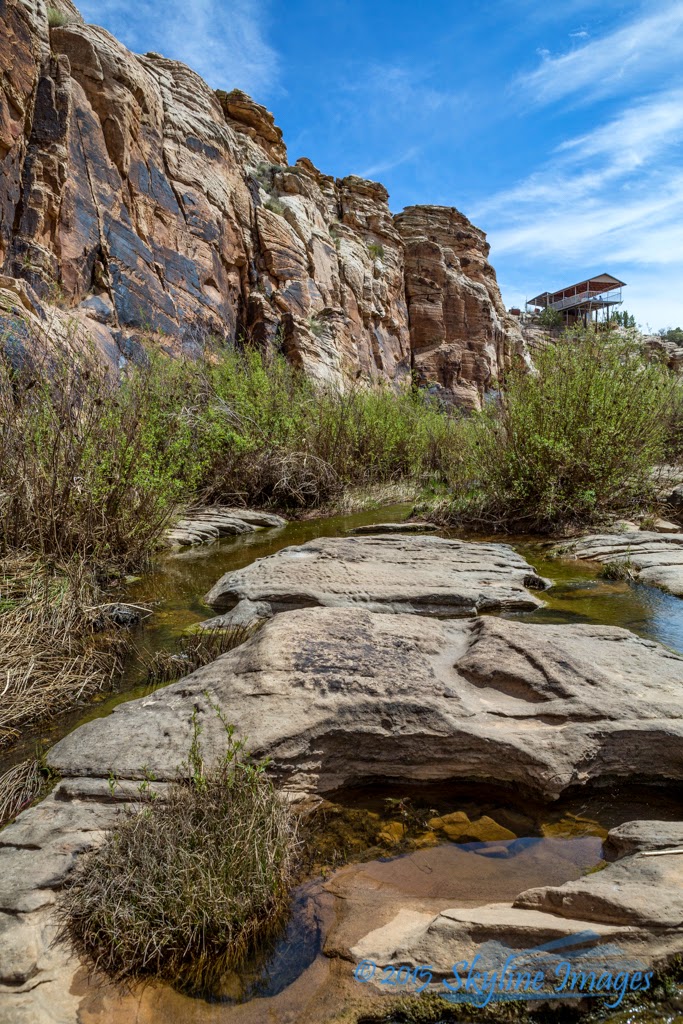
Chevelon Canyon and the picnic deck
Finally we reached the section of Chevelon canyon famous for the density and well-preserved state of its petroglyphs.  We spent several hours down in the canyon and had picnic lunches on the (somewhat incongruous) cantilevered covered deck.
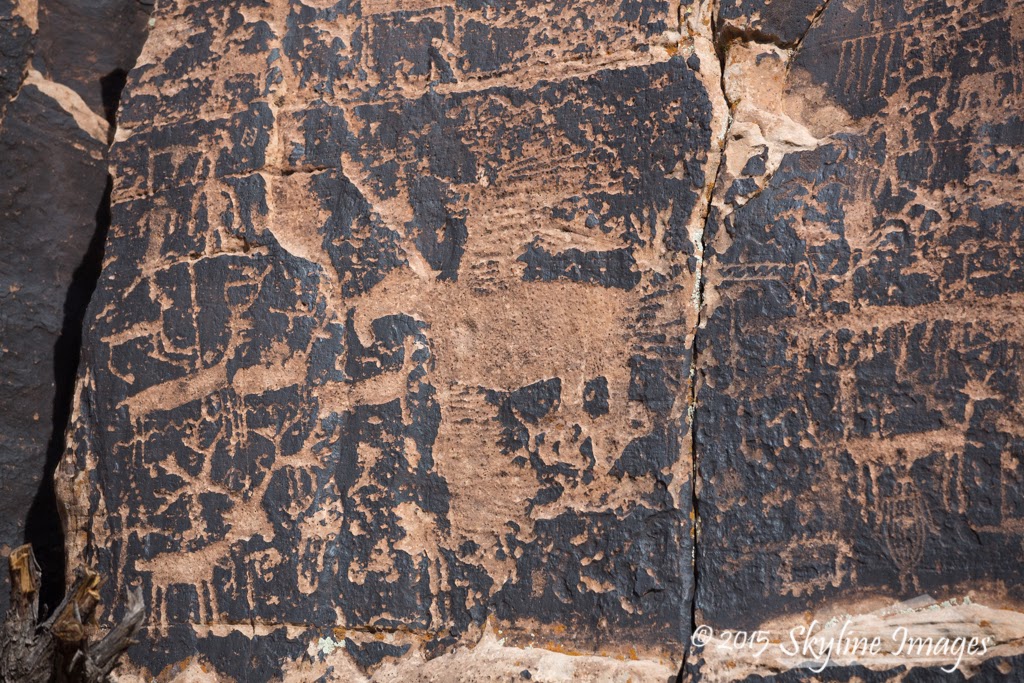
Dense Petroglyphs
The plan had been to go back to the State Park for the night, but I was delighted that Mr. Baird gave me permission to camp there on the edge of the canyon.  There’s a certain presence to this place which I didn’t fully appreciate until everyone else had gone.  Many times while watching the afternoon light change on the rim of the canyon, I thought I heard voices below.  It could have been the wind, or perhaps it was something more mysterious.
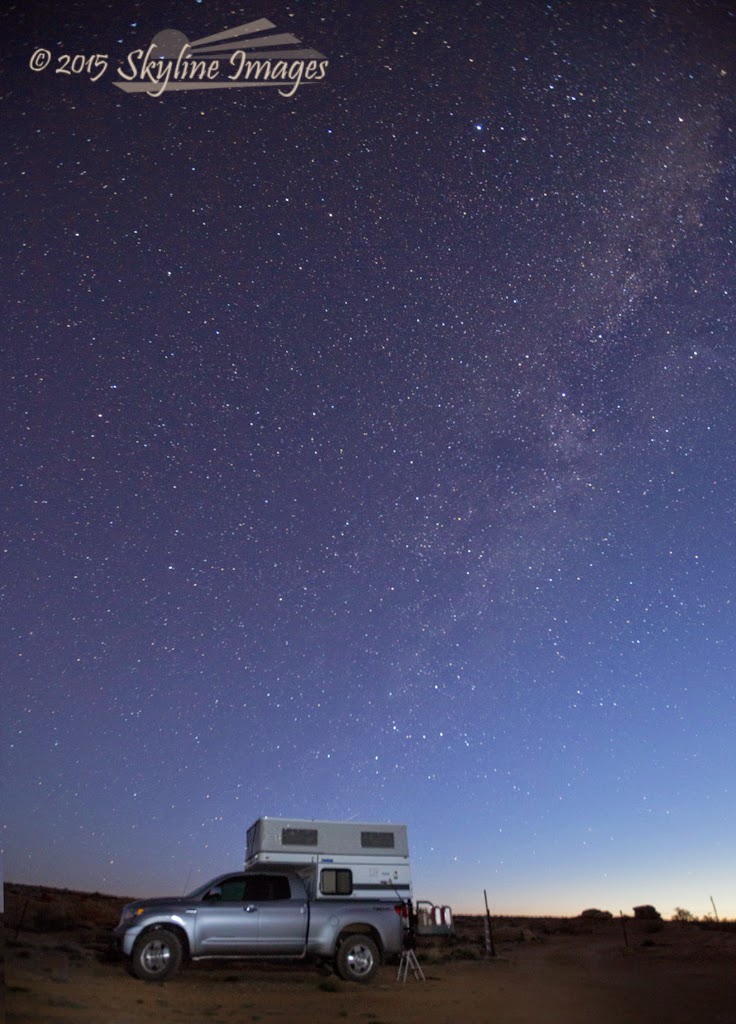
Under the Milky Way
The moon went down at 3:30AM, so I was up at 4:00 shooting the stars in my jammies, marveling at my good fortune camping in this unparalleled place.

After I locked the gate on my way out and called Mr. Baird as he had asked to let him know I was OK, I was on the road and wondering which of my friends might enjoy a visit to this sacred site.  The problem with camper addiction, of course, is that it’s never satiated for long.

Sunday, March 22, 2015

Scale and Perspective; Lake Powell


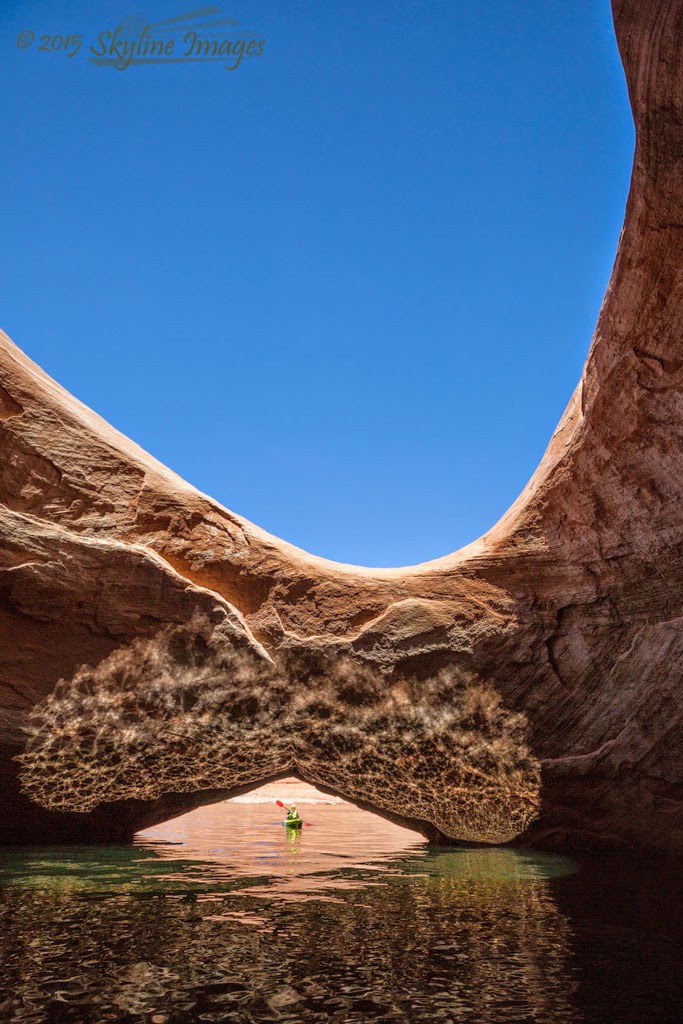
Kayaker, Rock Creek Arch, Lake Powell

Lake Powell is indescribable.  With words, sure, but sometimes also in photographs.  The shapes, the scale, the light can be very difficult to convey.

Man in the Landscape (Gary Ladd), Last Chance Canyon, Lake Powell
One of the lessons I’ve learned on the lake from my mentor Gary Ladd is to put people (often him) in the image.  The placement not only provides scale, but also a focal point since our brains are wired to find and focus on the human form.

Perspective; Great Alcove, 50-Mile Canyon, Lake Powell.  There's a human there for scale.
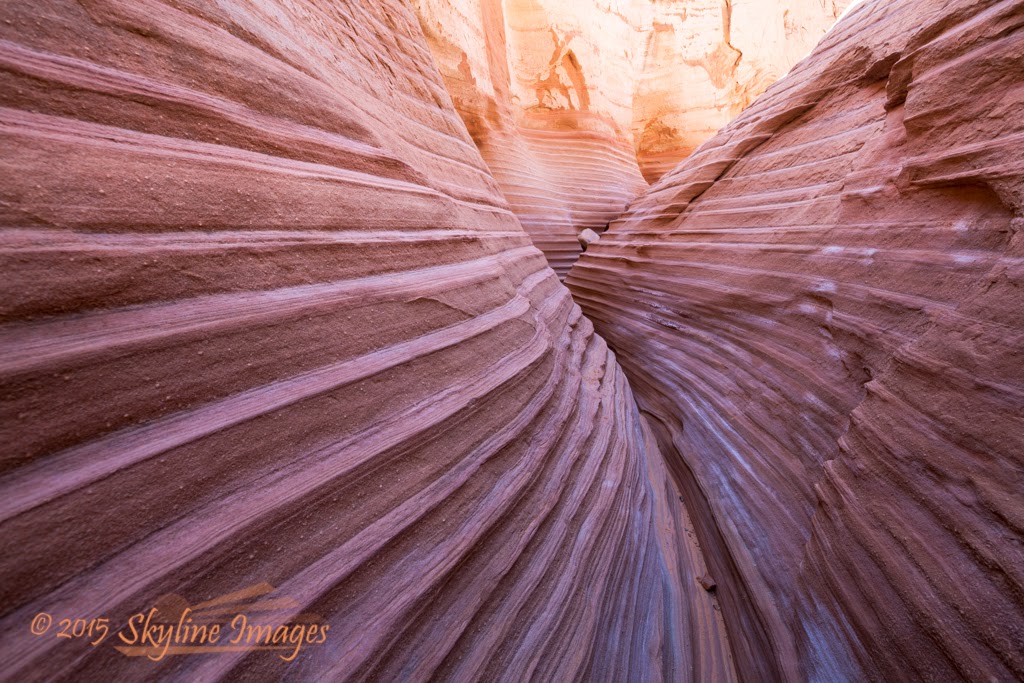
Another technique which can be helpful is varying perspective. A wider angle, for example, can give a whole new take on things.  I played with 8mm fisheye views during this last trip, and I love the way it shakes things up.

Cathedral in the Desert at several water levels (2012, 2014, 2015)
Time is another tool for gaining perspective.  After my 2014 Lake Powell trip, I wrote about the way the look of a place can change at different water levels.  Since I shot Cathedral in the Desert on each of three trips, it provides a fine example. From Left to right, the water levels are (in elevation above sea level; data provided by the U.S. Departmentof the Interior) 3620, 3575, and 3590 feet.

"Fat Man's Squeeze," Lake Powell
Finally, there’s the photographer’s trick of forced perspective.  With it we get close to the scene’s foreground to create the illusion for the viewer of being in the photograph.


Glen Canyon Natural History Association sponsors houseboat-based photo workshops in spring and fall (when the lake is uncrowded) for a remarkable price.  I’ve often wondered why this trip is not wildly popular and overcrowded, but perhaps part of the problem is that it does defy description.  You might want to go and see for yourself.


More images from the recent trip are in the Page and Powell Gallery on skylineimages.net

Wednesday, March 4, 2015

Why We Go


Marco, Florentina, Alejandra, and me

Florentina graduated from high school a couple of months ago.  When we met her, she was twelve and painfully quiet, yet she had a steadfast determination.  She was our randomly assigned scholarship student through Cooperative for Education, which meant that we paid for her direct and indirect school expenses. The youngest of five, her education would have been out of reach, but Flor is just the kind of dedicated student that this program seeks.  


Statistics tell us that only 20% of Guatemalan kids make it through high school, but these numbers are skewed by the wealthy.  I'm certain that in the western highlands, home to indigenous families, the percentage is less than half that.  We're very proud of her.  She's looking for a job, using her bookkeeping skills from high school ("Diversificado"). We're mobilizing the few connections we have in Guatemala to help her.  Her dream is to attend University and study engineering, but she feels the need to get a good job first.  Her peers often work weekdays and do their collegiate study on weekends.  We told her we'd help her any way we can.

With Florentina when she was about 14
Flor was a little worried that, after seven visits, we might not see her again, despite having become Facebook friends.  After all, she had graduated from the scholarship program.  I suspect, though, that we'll be back. We just met our new student, Alejandra, who will begin Middle School ("Basico") next year.  She's thirteen and quiet like Flor was at her age.


One of my favorite moments from this nine-day trip (I'm on the plane home writing this) was at lunch with both girls and Jennifer Sands, a COED staffer who was enjoying lunch with us and helping us with translation.  My husband asked Flor whether she had advice for Alejandra.  We expected a few sentences, and we were delighted to see Flor step gracefully into mentor mode.  She spoke for twenty minutes about everything from study habits to the importance of following program rules like not having a boyfriend.  She'll be going to school in Flor's town, and I hope their relationship can continue in some form.


To read more about COED's work, which includes textbook, computer and primary school reading programs as well as scholarship support, please visit COED's website.  Who knows; you might want to help break the cycle of poverty in Guatemala through education too.


Perhaps you'll enjoy a couple more highlights of this trip.

Just after dawn, I love to watch the fishermen in their small wooden boats net fishing in the mist of Lake Atitlan.

The Tacaxoy family, who I met on one of my first trips, now has two kids with college under their belts with good jobs and fluency in three languages.  The younger two are still in school.  These kids were the inspiration for the COED scholarship program.  Along with their parents, they welcomed a group of us into their home and patiently answered our questions.  I was touched by the parents' well-justified pride.

Leaving a hotel in Antigua, we were delightfully delayed by a procession marking the second Sunday of Lent.  I've never been there for the elaborate displays of Semana Santa (Holy or Easter week) so I was thrilled to see a bit of the pageantry.  Elaborate sawdust carpets (alfombras) are created in the middle of the cobblestone street, only to be walked on by the human bearers of religious floats.  Purple robes, incense, and marching bands round out the experience.

Thanks for the read.  Please feel free to check out the Guatemala Gallery on the SkylineImages website.